
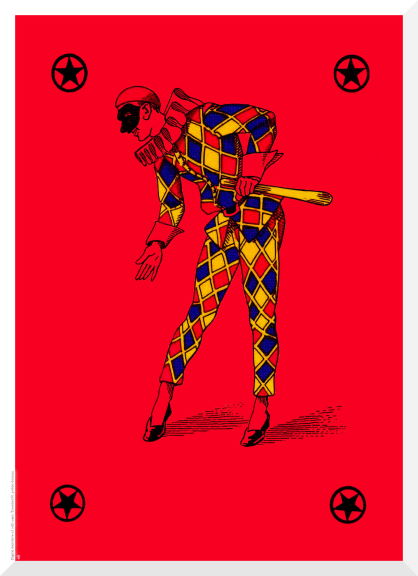
The impresario, Tony di Curtis was sitting in his office with a cigar in his hand when he turned to Katarina and anyone else who cared to listen to him (since the door was half open and an act was pacing outside) trumpeting his desire to learn English from a real Englishman.
“By the way,” he said. “I don’t want one of those Italian teachers who have lived five years in the Bronks. I want the real thing, I want madre lingua.”
His tongue rolled around the word as if indeed it was the clue to his ambition.
“In that case,” said Katarina, “You better have Patrick.”
Tony raised his eyebrow.
“How can an Irishman be mother tongue?”
“He works at the English faculty.”
“Well, does that qualify him as mother tongue?”
“Tony, he is mother tongue Irish. Besides, he is the best. Everyone says it.”
“Like who?”
“Ask around if you want. Honestly I don’t know why you bothered to ask me if you can’t accept my suggestions.”
“Va bene,” he said, “have you got his number?”
“You want me to phone him now. Or are you going to deal with this contract?”
“Later will do. Anyway,” said Tony, slowly adjusting to the idea as he puffed on his cigar, “I always preferred the Irish to the English. They make much better whisky.”
“Ignorante,” she said, “the English don’t make whisky.”
“What do you mean?”
“Even I know whisky is Scottish.”
Di Curtis shrugged. “It’s the same thing, isn’t it?”
“And another thing,” said Katarina, “he wants the lesson at eight o’clock in the morning.”
“Well,” said Patrick. “Nothing ever happens in the faculty before ten.”
“Don’t think for a minute he’ll be an easy student.”
“Don’t you worry, Katy. He’ll get used to my ways.”
“All the same,” said Katarina. “I better keep an eye on him.”
As good as her word, Katarina entered Tony’s office on the morning of the first lesson.
“What do you want?”
“Don’t you want your money?”
“You counted it?”
“You know I did, Tony.”
“Put it away in the safe.”
“Then I need the keys.”
Tony opened the desk drawer and threw the keys on the table.
“Stai attento. La gente è forba,” he said, turning to Patrick. “How do you say that in English?”
“Beware. People are cunning.”
Tony looked at Katarina and repeated the phrase. “Beware. People are cunning.”
“What about you, Tony?” said Katarina, who did not like Tony to get away with such pronouncements. “Are you cunning, too?”
“What about it?” said Di Curtis, who, in spite of his ambitions, was from a small town in the middle of nowhere. “Where I grew up, in contrast to this den of thieves I have the misfortune to live in is scrupulously honest.”
“In that case,” said Katarina, “you won’t mind if you give me last week’s wages.”
“What, are you suggesting I am tight?” Tony bristled.
“I wasn’t suggesting anything of the sort,” said Katarina, winking at Patrick over his shoulder. “By the way,” she said, putting three notes on the table, “here is the money for Patrick’s lesson.”
“What did I say, Patrick? La gente è sempre forba.”
“Remember, Patrick. Don’t let him get away with anything. You must test him every day on his irregular verbs.”
“Go. What’s the past of go?”
“Went.”
“That’s right. Go, went, gone. Even I remember that. Now,” Tony said, turning to Katarina, “get off with you and let me get on with my lesson.”
As it turned out Tony and Patrick got along like a house on fire. Tony would invite Patrick to the club of which he was proprietor, known in its current manifestation as the Gorgeous. Patrick would profess to be thoroughly entertained by the harlequinade parading through the Gorgeous, even the tired old variety acts and Beatles cover bands. The lessons went on all through the winter and into the spring. Sometimes Tony was in Milan and sometimes he was in Rome. Patrick did not mind very much. Things were beginning to hot up in the faculty; exams were just round the corner, and, besides, his mother was coming over from Dublin.
“Katy, I can’t thank you enough. It is very kind of you to agree to put Mother up.”
“Don’t mention it,” said Katarina. “We’re looking forward to it.”
“I promise she is a very easy guest. She’ll cook us a stew and is not averse to doing a bit of ironing. Mind you,” said Patrick, “I don’t know how she is going to occupy herself while I am stuck in the exam hall. I will hardly be able to take her to the beach.”
Katarina smiled. If she was aware of a ruse, she chose to ignore it.
“Never you mind, Patrick,” she said. “I am sure one of us will be able to take her to the beach. Besides, Tony owes me a day off.”
“Katy, you angel!” said Patrick. “I don’t know what I would do without you.”
San Vito was an old sixteenth century monastery that overlooked a rugged bay with a beach tower where Katarina liked to spread herself out upon the rocks. If here there was no sand to speak of, she knew of a nice spot a little further along the beach road. “You’ll love it, Mrs. Wilson,” she said. “Everyone does when they see it.”
“Katy,” said Mrs. Wilson, “I cannot imagine anything more heavenly.”
A path cut between whitewashed villas onto a small sandy beach. At the height of summer the beach heaved with chubby mothers and their little charges, gangs of teenage boys horsing around between the parasols and cold boxes and the sultry Lolitas and their supersize girlfriends, but the season was still a few weeks off. There was no one on the beach, just an old couple looking after their young grandchild.
There was not a ripple on the water when Katarina swam out into the little bay and hauled herself up on a green bank of rock. It provided a perfect platform from which to dive into the water and follow the little fish as they nibbled at the seaweed.
Returning from her swim, she found Mrs. Wilson ensconced with the old couple. They all laughed as the little boy filled his swimming trunks with pebbles and sand.
“Isn’t that priceless!” said Mrs. Wilson.
“È troppo ridiculo,” she said.
Katarina lay back and slipped into a pleasant daydream that may have taken in the little boy and the holiday villa over yonder when she received a call from her sister.
“What is it, mia sorella?”
“Don’t hold your breath,” she said. “È stato un furto a casa.”
On the surface Katarina may have appeared quite cool and collected, but Mrs. Wilson was not to be fooled as she pulled the towel out from under her feet and began to beat out the sand.
“What on earth is the matter, Katy?”
“There’s been a burglary,” she said.
“Oh, what a nuisance,” said Mrs. Wilson, “I thought things like that only happened back home.”
“Have they taken anything?”
“I don’t think so. After all, what was there to take?”
Although nothing seemed very much out of place; there was the usual pile of books and papers on the dining room table; the contents of Mrs. Wilson’s suitcase were in a pile on the bed.
“How did they get in?” said Katarina, turning to her sister.
“Over the roof.”
“The window was open.”
“I thought I shut it before I went out.”
“We really must do something about that window.”
“Do you think the Vicino was involved?”
Amelia shrugged.
“He’s never done anything to us before.”
“Oh, no,” said Mrs. Wilson suddenly. “I was sure I left it in here…”
“Mrs. Wilson, you are red.”
“Am I, Katy? I don’t feel very flushed at the moment. I can’t find my necklace. I was sure I put it here in the bottom of this shoe bag.”
“What’s the Signora saying?”
“She can’t find her necklace. She thinks it’s been stolen.”
“What does she expect? She walks around dressed like that? She sticks out a mile.”
“You’re quite right. It’s idiotic.”
“Well,” said Mrs. Wilson who was listening to all this without understanding a word. “Are we going to call the police?”
“Oh, Mrs. Wilson,” Katarina said. “I don’t think you understand. The people here are all thieves.”
“Are you talking about the Police?” said Mrs. Wilson.
“No, Mrs. Wilson, I am talking about our neighbours.”
“She’s right,” said Amelia after a pause. “Perhaps we should call the police.”
“What if the Vicino is involved?”
Amelia shrugged.
“He’s never done anything to us before. Why should he start now?”
“Even still, I think we shouldn’t discount it.”
In the middle of all this Patrick walked in through the door.
“What’s going on?” he said. “I thought you were at the beach.”
“Patrick,” said Mrs. Wilson. “Thieves have been here. They’ve stolen my necklace.”
“Oh, Mother, I am sorry. Which necklace was that? Not Aunt Delia’s?”
“No, not that one. The other one.”
“You mean the one that boy before dad gave you on the ship.”
“Yes, that one.”
“Are you okay, Mother?”
“Of course, I am okay, Patrick. It’s the girls I’m worried about. There’s nothing worse than someone coming into your home and going through your things.”
“Your mother isn’t upset? – She’s putting a brave face on it.”
“Well,” said Patrick. “she had that necklace a long time. It had sentimental value.”
“Of course, there might be a way of getting it back,” said Katarina. “We could go and talk to the Vicino.”
Patrick looked bemused. “I thought you were always joking about the Vicino.”
“It’s no joke,” said Amelia. “He has been in prison.”
“All the same don’t you think we ought to call the police?”
Katarina shrugged.
“What can they do?”
“How about investigate the scene of the crime.”
“It’s not that simple, Patrick,” said Amelia.
“Well, it can’t be that difficult. All you have to do is swab for fingerprints. To the best of my knowledge this has been common practice in police forces for well over a century.”
“Oh, I don’t know,” said Katarina, suddenly throwing up her arms and feeling thoroughly deflated. “I need to go to the bathroom.”
Katarina shut herself in the bathroom and sat down on the toilet. Just as she weighing up the options between the Vicino and the police, she saw it on the shelf above the basin, beside the cup with the toothbrushes. The necklace belonged to neither her sister nor herself; it was far too expensive looking for that.
Mrs. Wilson was over the moon. “Katy,” she said, “how stupid of me!”
“There you go, Mother,” said Patrick. “We are lucky we didn’t have to call the police.”
“I am sure,” she said. “Though I can’t see what’s wrong with calling the police.”
“Never mind, Mother. Just be thankful you got your necklace back. The question is what are we going to do with it now?”
“I’ve got it,” said Katarina suddenly.
“What?”
“Tony’s safe.”
“What about Tony’s safe?”
Katarina looked at her sister and smiled.
“Never you mind, mia sorella! Why don’t you go and do something useful like put on the pasta?”
“Why do I always have to cook?”
“Isn’t it obvious?” said Katarina. “You’re a much better cook than me.”
A few days later, Tony di Curtis was sitting in his office contemplating the cigar butt that smoldered in the ashtray on his desk when Katarina burst in on his thoughts.
“Tony,” she said. “What have you done with the necklace?”
“What necklace?”
“The one I put in your safe.”
Tony looked embarrassed.
“If you must know,” he said. “I gave it to my wife.”
“Why did you do that?”
“Well, don’t look at me like that. I thought someone had left it in the club.”
“Tony, you idiot,” she said. “That necklace belongs to Mrs. Wilson, Patrick’s mother. She’s going home tomorrow.”
“I can’t ask for it back now,” he said. “My wife will think I have a mistress. Anyway, what were you doing putting her necklace in the safe?”
“I told you! I put it there for safe keeping.”
“Well, I don’t remember.”
“That’s what you always say.”
“Is it my fault if you put other people’s necklaces in my safe?”
“The question is,” said Katarina, “how are you going to make it up to me and Patrick?”
Tony shrugged.
“I could always buy you another necklace.”
Patrick was super busy. In fact, he had been busy for quite a while, though it always was the case just prior to Christmas when he received the phone call from his mother.
“Patrick,” she said, “you are going to think I am an absolute fool, but I cannot for the life of me remember what I did with my necklace.” Now you might think as Tony might say Mrs. Wilson was either extremely cunning or forba. If she had forgotten she had made Katarina a present of the necklace, Patrick was and always would be a confirmed bachelor.