

Upon Feasting
In modern society, it may be noted, there is a horn of plenty. Every day may be a feast of delicacies from the cheese counter and the delicatessen, or the cake shop and the patisserie. If we modern beasts and men have forgotten what is special about a feast, the Garden dwellers know the true value of a feast, and its cost. For if there is never want, there is also never plenty. They do not forget it. And what better way to show their gratitude than with a tale?
From Mr. Whizz’s Notebook, Concerning the Garden, a thing rarum.
When Laila climbed down from the treehouse, she could not believe her eyes.
All the tables had been beautifully laid and decorated. The tablecloths were sprinkled with cut margaritas; tucked into the napkins were twigs of rosemary or ears of corn. Down the length of the tables had been placed halved logs with candle holders scooped out of them. Gnomes were going about their last-minute duties: lighting candles, straightening the odd knife and fork, or wiping down the gem crusted goblets, all under beady eye of Cedric. When Laila saw Cyril climbing off a bike, she called over to him:
“Cyril! Thank God! I thought you’d been caught by smarmers.”
“It was a close shave! Let me tell you!”
Excitedly the two friends exchanged their news. While Laila told Cyril all about her adventure at the top of the trees with Mr. Whizz and Bird, Cyril told Laila all about the siege at Flor Cottage and chasing away Stokesy and the wolf.
By now the garden dwellers were congregated around the tables in a collective of confusion about who was sitting where. Pannies scratched their heads, scouties looked blank-faced until they saw a little brown fellow standing on a box, about the size of Billy Brownlow. He had a series of different flags in his hands that he waved – like a pocket air traffic controller – at clueless pannies and scouties, who shuffled off to their seats.
“What’s going on?” asked Laila.
“They can never sit down without Wavy Flaggy. – He’s the only who knows what houses they’re in.”
“But there aren’t any houses here.”
“I know,” said Cyril, “but you try telling that to pannies and scouties.”
Cyril tried his best to explain… It seemed that pannies and scouties were divided into four houses, a bit like school, known as Greenies, Reddies, Blueys and Yellows.
“So that’s the point of the flags?”
“It’s complicated,” said Cyril. “A lot of them are colour blind.”
“I see,” said Laila, who of course did not see at all.
“What about gnomes?” she asked. “Do they sit down in their houses?”
“Gnomes don’t need houses or Wavy Flaggy to know where they’ve got to sit.”
Hardly had he spoken when a dispute broke out between four young gnomes, which an older gnome (it was Venables) was trying to arbitrate.
“I’m not sitting with that lot of Backbinders,” one was saying.
“Yeh, we always sit with Yin and Yang.”
“Well, I’m sorry to say Yin and Yang are not coming to the feast.”
“What’s happened to them? Have they been dumped in the Tree of Nothing again?”
“Rumour has it,” said one of the Backbinders, “Smarm’s got ‘em. That’s what’s going to happen to you lot of Hogwashers if you don’t listen to Ven.”
“You’re so dopey you’d fall into Smarm’s sack in your sleep.”
Suddenly, on the blast of the trumpet, everyone including the four young Backbinders and Hogwashers stopped talking or arguing and dashed – as if they were involved in a game of musical chairs with a particularly competitive group of dads in shorts and sandals – into the nearest available seats.
Venables sat down, mopped his brow and pretended he had nothing to do with them.
Into the clearing strode a bronzed and muscular creature, half man, half beast, with a pair of antlers.
“Chuck, I’m glad you are here!” cried the Mistress of the Garden from the high table where all could see. “Will you do the usual honours and open the ceremony?”
The bronzed deer man bowed.
Laila watched as he began to flex his body. His antlers glistened and his muscles rippled. The cherubs fluttered around him oohing and aahing.
“I’m sorry to ask,” said Laila, turning to Mercedes. “What is the point of all that?”
“I don’t know,” she said. “I have seen many strange things here. This time his performance is growing on me.”
And, indeed, it seemed to Laila there was something remarkable about the dear flexing antler man. If he was ridiculous, Chuck was also, in his own way, a rare thing, or thing rarum.
The band of gnomes trooped out; Anatole banged his saucepan and they went straight into a number called Caldonia. The stage shook; the voltaic pile tremored in an explosion of sax, trumpet and bass. Anatole’s nose twitched and he stomped the timbers, shaking a pair of maracas. In the middle of the song – that had taken some flight of fancy of clarinet, piffle and dum – he jumped off the stage and threw the maracas at Cyril, who had been sitting there with his arms folded. He did not want to get up from the table until Anatole pulled him out of his seat and lifted him onto the stage. Cyril started shuffling and shaking the maracas around the stomping force of nature. The sweat was pouring down Anatole’s face as he sang:
“Caldonia
Caldonia
What makes your big head so hard?
I love her. I love her just the same
Crazy ‘bout that woman ‘cos Caldonia is her name.”
Everyone clapped or whistled or cheered. Even Billy Brownlow made a clap – though admittedly a very indistinct one, more like the sound of one hand clapping.
Cyril came and sat down.
“Wow,” said Laila, “I didn’t know you could play the maracas.”
“I can’t really,” he said. “I just feel the seeds.”
“Anatole,” said the Mistress of the Garden, “we have been much entertained by your band. What, however, has this Caldonia to do with tonight’s feast?”
“It is the main course,” declared Anatole. “Or as we say in French the plat principal.”
“Splendid. Everyone got their food and drink?”
A gnome (it was Grumpy) had just come down from the treehouse with the last barrel of cordial, as Mr. Whizz joined Laila’s table.
There were nods and murmurs of agreement.
“Before, however, we commence with the entrée,” said the Mistress of the Garden, turning to the priest, “Father, would you care to say grace?”
“Well, I must say,” said Mildred, “all this is extremely moreish.”
“I don’t know about Moorish,” said one of the nuns, “but it is delicious.”
“Equally delicious and equally moreish.”
“Next you’ll be saying it’s Moroccan.”
“Oh, I say, you’re making a joke,” said Mildred. “Even still there could be something Middle Eastern in it.”
“For me there is a bit a Spain in it,” said Mercedes. “It is like a good paella.”
“I don’t know about paella,” said Sister Sarah. “There’s something peaty there, too.”
“Sister,” said Father Allen, “next you’ll be saying it has the bogs of Ireland in it.”
“Father, that sounds rude.”
“To my mind,” said the priest, “it’s like all good country food. It is genuine and authentic.”
“I don’t know,” said Mildred, “There is still something I can’t quite put my finger on.”
Cyril, who had been listening to the table talk, as he ate a ball of fresh cheese (a bit like a mozzarella), said:
“Nose always says he dreams up his recipes.”
“He doesn’t follow a book?”
“Of course, he’s got books,” said Cyril. “But the best recipes come from inside his head.”
“Be that as it may,” said Mildred, “I wish I could identify that secret ingredient.”
When they had all eaten a plentiful sufficiency of Anatole’s moreish but nonetheless enigmatic dish, it fell to one of the gnomes, in fact it was Al of the Coconuts, to bang a goblet for silence.
A giant snail, who was sporting, Laila noted, a red bow tie and a green topper between his tentacles, cleared his throat.
“Fellow travellers,” he began. “And I call you travellers because we are all on a journey. As my brother Frederick would say – Laila noted the giant snail in the red topper sitting beside him – “Roderick, this is the story of how we lost our third brother, FrantiK, spelt with a giant K.”
One of the boars, in fact it was Bert, sobbed into his napkin.
“I do hate these emotional stories. They make me well up.”
“For those of you familiar with the mollusc species,” Roderick went on, “you will be aware that we are fortunate to carry our own accommodation on our backs. For all her beauty and bounty, Mother Nature has given us one singular drawback. That is, we are some of the slowest, if not the slowest creatures in the Garden. Roderick and I learnt at an early age: to keep one’s house clean and tidy and without clutter. Thus, when danger arrives, we can slip smoothly within. And if speed – as distinct from haste – be of the essence, since we are not carrying so much baggage, we can escape our pursuers.”
With a loud sob, Frederick interrupted his brother.
“Alas, poor FrantiK!” he cried. “The tale is of our brother who could not resist every knick-knack he passed. Indeed, knick-knacks he would collect on a daily basis and secrete them away in his house. His knick-knacks made him very happy until the day the Big Bird found him.”
“Alas, poor FrantiK! Alas, indeed!” Roderick went on. “Frederick and I escaped the gaze of the bird and hid in our uncluttered shells. Poor FrantiK tried to run away, but the baggage of his house was so great the bird managed to trap him by putting a claw on his tail.”
“He could not hide,” cried Frederick. “Indeed, he could not escape the clutches of the bird because his house was full of knick-knacks.”
Laila could not contain herself.
“What happened?” she cried as if she was speaking for all and sundry.
“Sadly, the Bird swallowed him whole. Brother, house and knick-knacks all gone.”
“That’s so terribly sad,” said Laila, thinking. “Is there a moral?”
“If there is a moral,” said Roderick, “it is this. Life is about you, not your possessions. If you mistake the two, you will be consumed.”
“Golly,” said Laila, taken aback. “I had better remember that.”
Roderick, the giant snail sat down to applause; at which point a tall lady in a multi-coloured patchwork coat and headband stood up and began to stumble into speech.
“I feel like – I mean really – bodacious,” she declared. “I just have to – I mean – I really must – more than must – I want to sing you all a song. It’s going to be totally bodacious.”
There was much whispering among the gnomes.
“Oh, no! It’s Frisco Bea! – We can’t let her. – Remember last time.”
“Don’t tell Anatole. We need to get the goat’s cheese.”
Laila tugged at Cyril’s sleeve.
“Why do you need goat’s cheese?” she said. “We haven’t even had the pudding yet.”
“What a voice,” said Cyril. “It’s deadly. Croaks like she’s got a frog in a throat. Bleats like a nanny goat.”
“Why do you need the goat’s cheese?”
“It’s for your ears.”
“Don’t you have any cotton wool?”
“You’d be surprised. Goat’s cheese is the best for blocking out unwanted noise. Besides, you can eat it afterwards.”
“You gnomes are disgusting.”
“Is the band ready?” said Frisco Bea, turning to Anatole.
“For you, my adorable hipster, the band is always ready.”
“What’s worse, Anatole, doesn’t hear it.”
“What doesn’t he hear?”
“The fact she can’t sing.”
Frisco Bea began to clear her throat only to emit a horrible gurgling sound like Dad at the bathroom mirror.
“See what I mean,” said Cyril. “She’s a croaker, not a smoker.”
“Cyril, I hate to say it, we’re going to need some of your goat’s cheese.”
“Boys, are you ready?” Frisco Bea called to the members of the band who gave half-throated blasts of their instruments.
“Ms. Bea, before you start your recitation, I thought you might care for one of my concoctions.”
Mr. Whizz whisked a goblet from under his beard and handed it to Frisco Bea.
“Mr. Whizz, this takes me back to the tequila sunrise of my youth.”
“I don’t know about that,” said Mildred, who knew all about the seventies, even though she often thought she could not really remember them, “it looks more like a Pink Lady.”
Frisco Bea took a sip from the goblet, set it down on the table and, once again, cleared her throat. This time, to everyone’s relief, including the cheese sharing gnomes, there was no horrible gurgling, but a fine – even bodacious singing voice:
“Let me take you down
Cos I’m going to Strawberry Fields…”
Then it was Anatole’s turn to speak.
With a sober expression, he tapped his goblet for silence.
“I have a tale,” he began, “from a city where I once lived and a lady I once knew.”
“I must say,” said Mildred, turning to Mercedes, “I have always enjoyed a bit of French melodrama.”
“Are you so sure he’s French?” said Mercedes. “I could have sworn he’s from Montreal.”
“Well, I don’t think you should ever say that to a man from Montreal.”
“Let me begin with the Lady I once knew. Her name was Cybil and she had two sisters, C’s’n’nt and Vowella. Their parents were old and infirm, and the sisters sold words on the market every day so they could buy food for them. There was only one challenge. All three sisters needed to be at the market stall to sell the words. The reason for this if you think about it is obvious. Even if you have C’s’n’nt and Vowella, you still need a Sybil to put the words together.
“I see,” said Laila, feeling smart that she understood. “What happened when all three sisters were not present at the market?”
“Sybil was one of those people who have trouble getting out of bed in the morning. If she managed it, she was always distracted by something. Without her, the other two sisters couldn’t sell their words and buy food for their parents.”
“Didn’t Sybil care?”
“She did, of course, but she had so many interests, including jazz and bee-keeping she was always forgetting her duty to her parents. One day, her mother who was very weak, from lack of vitamins, faded away.”
There was a gasp around the tables.
“Yes, Sybil’s mother died of starvation. When they buried her, however, the Minister asked Sybil why she had died. Overcome with remorse, she vowed to change her ways. So she married a man called Sentence and they lived in a house called Paragraph.”
“What happened after that?” said Laila. “Did they have a son called Full Stop?”
“Very funny,” said Anatole. “They went on to form a band called the Punctuation Marks.”
“How strange,” said Mercedes. “That could have been my story. At least it could have been if I hadn’t met René.”
“That seems, on reflection, like a fair sentence,” said the Mistress of the Garden, who had been listening attentively to all the stories.
“Does anyone else wish to have their say?”
“Hem, hem,” went the wizard.
“Hem, hem,” he repeated.
But there was still a murmur of rhubarbs and custards around the table when he began.
“If that seems like a fair sentence,” he said, “I have often wondered about my own sentence. Once, many moons ago I was a magician who used to tell jokes and make people laugh.
“What makes the tower of Pisa lean? – It doesn’t eat.”
Someone started laughing.
Laila looked round and saw Father Allen chuckling.
“As the witch said to the skeleton:
Come on, there’s a dance down the road. – But I haven’t got any body to go with.”
Mildred and Mercedes were joining in, and so were the nuns.
Laila looked round at the gnomes and the Mistress but none of them were laughing.
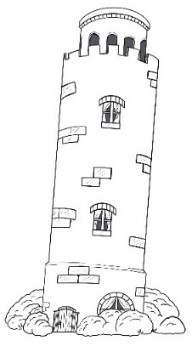
“A plain gold, twenty-two carat ring went missing from the Croquet Club on Tuesday afternoon… Police wish to interview any donkey who is engaged but cannot spell.”
Laila started laughing, too. Even if it was a silly joke, Mr. Whizz told it with such a dry expression, followed by a slight twitching of his beard, she practically fell off her seat.
“Isn’t that funny?” she said, turning to Cyril whose hand gripped the back of the seat.
Cyril looked blank.
“Wizards can’t tell jokes,” he said. “They can only do magic.”
The Mistress now stood up to make her speech. “Firstly, I would like to thank Mr. Whizz for his unforgettable puns,” she said. “Where would we all be without a sense of humour?
“I think you will all agree we have been richly entertained, not only by Anatole and the Coconuts, but also all the stories we have heard tonight. However, it is the custom that I give my verdict on the stories and decide which story has most pleased me. I must say, as usual, all the stories have pleased me and it is always most difficult to decide which has most pleased me most. However, it comes to the moment in the evening when I must choose my favourite.”
The Mistress appeared to be about to make her mind up when she was interrupted. “Utterly, what do you want?”
“To tell my story, Mistress.”
“Well, if you must.”
With evident relief the Mistress sat back down in her chair and took up her goblet of cordial, while the cherub fluttered into the middle of the clearing.
“It all started,” she began. “from the day Prince Charming left to live in the forest with the wolves.”
“Who,” asked Laila, “is Prince Charming?”
“He once lived with us,” said the Mistress. “Then he became too charming and had to leave.”
“Us cherubs, that is, Totally and Completely and I,” went on Utterly, “kept watch for many days. Every day the wolves would howl and we would huddle together for fear. Totally and I were convinced the wolves were coming. We wanted to go and tell the Mistress, but Completely stopped us.
“The wolves will not come,” she would say. “At least not for today.”
“The following day, it seemed to us, the wolf howls were louder and closer. “Come on,” I said, “we must go and tell the Mistress.” Totally and I set off but Completely refused to come.
“As usual, the Mistress was very cross. “You silly creatures,” she said, “why did you leave Completely on her own? Now she’ll be completely lost without you.”
“So we rushed back. Although the wolves were howling their heads off, Completely was quite serene.
“On the third day the wolves continued to howl. I must say it sounded as they got behind us and inside our encampment. And yet Completely was calmness personified. I shall remember her words. ‘Never let their tricks undo you.’”
At that moment, from beyond the clearing, there was a loud wolf cry. The cry was taken up by other wolf cries.
All the guests jumped in fright. The pannies quaked and the scouties slapped their heads to stop the quaking. One or two of the younger gnomes ducked under the tables. The giant snail Frederick disappeared into his home taking one of the tablecloths and its contents with him.
The Mistress of the Garden called for order.
“Be calm, everyone,” she said. “They can do no harm here.”
Completely fluttered into the circle.
“Mistress, in keeping watch, I have remained rooted to the spot. However, I am here to tell you the wolves have surrounded us.”
As she spoke, a man, by now familiar, dressed in a tricorn and the coat of a Prince Charming, entered the clearing.
The Mistress rose to meet him with her bow.
“This is a feast,” she said. “Not a demonstration of force majeure by your creatures. May I remind you to be on your best behaviour, Prince?”
The man took off his tricorn and made a sweeping bow.
“It is true I am both prince and wolf. This is my story. Once upon a time I was man and uniquely a man. Once upon a time, I might even have fallen in love.”
He looked hard at the Mistress of the Garden, who was unmoved.
“Once, indeed, I walked on two legs among the trees. Such was that happy garden state. Ripe apples dropped about my head. Nectarines and peaches fell into my hands. And I wandered amongst the vines and tasted the sweet wine of the grape. One day, however, I strayed too far from the path, and now, as you see, my eyebrows meet in the middle.”
Mercedes, who, since her encounter with the Prince had been more than a little circumspect, broke her silence.
“If you identify with the wolf,” she said, “why did you choose to come here among us?”
Smarm looked round with one of his smarmier smiles.
“A wolf is always a gentleman,” he said, “and a gentleman is merely an impatient wolf. I saw all those lovely strawberries and I thought to myself I cannot resist them, so I took them. In point of fact, so that you would all come to the feast and I could tell my story.”
“That is a very glib answer,” said the Mistress of the Garden. “I see you haven’t learnt anything since your absence.”
“On the contrary,” said Smarm, “I have learned that many new people have entered the Garden through the gate which your minions supposedly guard. It is the gentlemanly thing to do to offer them the strawberries.”
Whereupon he took the musket that was hanging from his shoulder and shot it into the air.
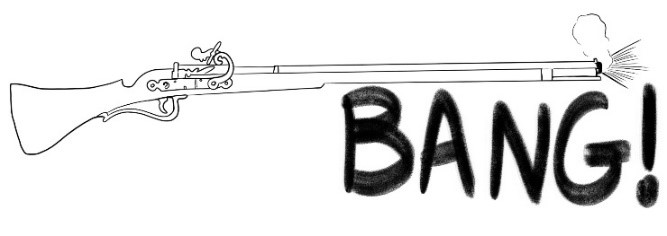
At this signal, a pack of wolves entered the clearing bearing punnets of strawberries in their mouths.