
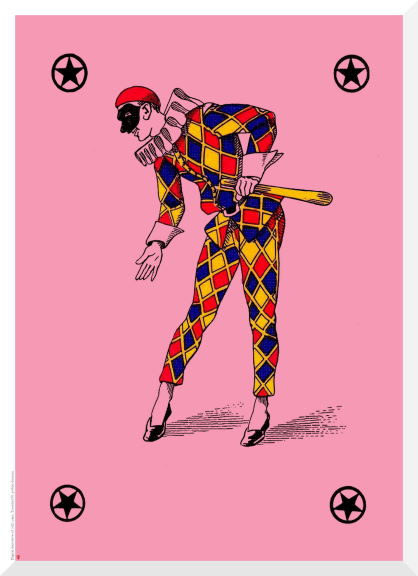
I frutti proibiti sono sempre i piu dolci.
Forbidden fruit is always sweetest. – Italian proverb
Julia was touched.
By chance they had found out that it was her birthday. Patrizia’s cousins and friends arrived. The chairs had been pushed aside and the tables laid out as a buffet with an abundance of Southern Italian fare: arancini, pizza rustica and pasta al forno made by Patrizia’s aunt, and a huge bowl of crudiaola pasta with cherry tomatoes, dressed with ricotta mazzotica and basil. Everyone had brought her a present – something they deemed might be useful for her new life, including a set of sheets and a tablecloth.
In the morning Patrizia and her cousin, Pierliugi bundled all her worldly possessions including what remained of the pasta al forno and the birthday cake into the car and they drove the fifty kilometres to her new home.
The two friends embraced.
“I hope you find what you are looking for,” said Patrizia. “In bocca al lupo!”
“Crepi,” said Julia.
“Come and visit me in Milan.”
It was her first day in town. Julia got up late, and, as it was a sunny day, she decided to go to the beach. She found a salumeria in the row of shops around the corner from the flat, and got them to make her a panino with mozzarella and San Daniele. From a one thousand lira shop she also bought a beach mat and some sun cream. Then she walked along the sea front, up past the solitary fishermen and people bathing on the rocks, to the local beach, which was known as Pane e Pomodoro, or Bread and Tomatoes.
Julia sat on the beach all afternoon, reading a book and idly playing with the sand. From time to time she dipped her toes in the water. Once and only once she went for a swim out towards the rocks that acted as a kind of breakwater in the artificial bay of the beach. As the sun went down, she dried off and packed up her things and went home.
When she reached the square, she stopped off in the bar under the flat and ordered a lemon granita.
A fisherman stood on the side of the road with a bucket at his feet. He wore yellow gumboots and overalls. Like an ancient shellback or servant of Neptune. Old men sat out in the square in their shirt sleeves and swallows flew around the gable of the old Scuola Elementare.
The charm and warmth of the scene tingled through her body.
“Ti piace la granita,” the barman said.
Julia turned back to the barman.
“È buonissima,” she said.
The barman smiled. “I’ve got a piece of land out in the country,” he said. “I grow the lemons myself. I’ve got figs and cherries, too,” he said. “The figs are still in season.”
He paused as he wiped one of his cups and placed it on the shelf behind him.
“Do you like figs?”
“I like your lemon granita.”
The barman chuckled. “Next time you must try my fig ice cream.”
Julia fell asleep in her bikini. When she woke up, it was the middle of the night. She stepped out onto the little balcony overlooking the square to smoke a cigarette. Her half-naked body tingled in the warm night air. As she climbed back into bed, she had the feeling of being at home in a way she could not remember.
The following day, she went back to the beach. Although the sun was out, only dedicated sun worshippers were about, one of whom sat, cross-legged, holding a mirror under his chin in a bid, she thought, to catch the last rays of the summer as joggers and cyclists sweated on the path.
Julia dozed off. When she woke up, the sun was back out. She turned and lay on her front.
“Ciao, bella.”
A coffee brown African with a wide-brimmed hat smiled down at her, showing all his ivory teeth.
“On holiday? Turista?”
“Teacher.”
“Insegnante, parli italiano?”
“Un po.’”
“Je suis Daniel.”
“Salud, Daniel.”
“Tu, come ti chiami?”
“Je m’appelle Julie.”
Between their French and Italian his eyes flitted over her body.
“Che fai?” he said.
“Just hanging here. And you?”
She used the Italian word cazzeggiare.
“Me, too. I also sell things.”
“Well,” she said, hitching up her bikini top, “what are you going to sell me?”
Daniel pulled a selection of dresses from his bag and spread them out on Julia’s beach mat.
Julia put one of the dresses on over her bikini.
“What do you think?”
“It looks nice on you. Sei carina.”
Daniel pulled out a little mirror from his bag.
Julia peered at herself.
The neckline of the dress was decorated with little flowers.
“Mi piaccono i fiori,” she said. “I’ll take it.”
Daniel came to pick her up in a battered old Granada. He had brought along a friend. His name was Cofi. He was slight of build and wore a pair of horn-rimmed spectacles.
“Prego,” he said, stepping out of the car and opening the door at the back.
Julia wanted to laugh at his serious, professorial expression, but stopped herself just in time.
They drove up past the beach and along the sea front for a few kilometres before turning down a narrow lane. The lane twisted and turned round increasingly narrow bends; they pulled up at a shabby looking villa surrounded by bamboo plants and prickly pears.
They parked the car outside the gate and walked up the drive. They did not go in the house but climbed the stairs to the roof where a barbecue was under way.
There was already a fair crowd, sitting on garden chairs and old sofas or standing around drinking and eating snacks off plastic plates around a long table with party food. There was a smaller table with a stereo, but no one was listening to it. Instead the throng was gathered round two student types with guitars. They were singing old, Italian hits from the seventies and eighties. People drifted in and out of the throng with their barbecue food.
Daniel got a plastic plate and piled some sausages off the barbecue onto it. Julia had found some forks, and they sat sharing the sausages from the plate and drinking the beers they had brought in a plastic bag.
After a while, the musicians stopped playing; someone put Almamagretta on the stereo and everyone got up to dance.
Julia began to sway to the music on her own until she noticed Cofi at her shoulder.
“Are you enjoying the party?”
Cofi smiled.
“And you?”
The party fizzled out some time in the middle of the night to the sad strains of Neapolitan dub.
Daniel and Cofi took Julia back to her flat. “Zitti!” she said, giggling as they walked in through the door. “We mustn’t wake my flat mates.”
“Not a whisper,” said Daniel.
“As quiet as mice,” Cofi said, grinning.
Julia need not have worried; the two Africans were as good as gold. She woke up on the sofa with a blanket over her. They had made coffee and bought some cornetti.
“Nutella,” she exclaimed, as Cofi put the cornetti on the table. The chocolate was oozing out of them. “I haven’t had nutella since I was a child.”
After breakfast, they went for a drive along the sea front to San Giorgio. Here they found a spot at the side of the road and sat on the rocks sunning themselves.
Julia rolled up her jeans and paddled around in the shallows. Following suit, Cofi slipped on one of the rocks and fell in.
Daniel cracked up. “What are you playing at, man?”
If Cofi looked annoyed, he did not say anything.
Julia wanted to laugh, too, but she didn’t because he looked crossly at Daniel.
“I let you into a secret,” said Daniel. “Cofi cannot swim.”
This was how it began, her flirtation with the so-called marocchini, the Senegalese street-sellers. For one delicious moment Julia thought she might succumb to temptation before pulling herself up and casting aside the dangerous nonsense running through her head when Cofi caught her and pulled her to him in the water.
“Cofi,” she said, “what are you doing?”
“What does it look like?” he said.
“I don’t know what it looks like,” she said, “let’s not think about it too much.”
He laughed.
“You are right,” he said. “Daniel always says I think far too much.”
Julia’s contract at the British School began the following day. She was busy getting to know the school and the other members of staff. She did not see Cofi until a few days later, when she bumped into him in the square under the flat wheeling his trolley.
“Bella,” he said, beaming. “Come stai?”
“Did you have any luck?”
“The beach season is over,” he said with a shrug.
“You didn’t sell any dresses.”
“I didn’t sell anything.”
“Not a thing.”
“I got chased by a dog.”
“Che sfiga! How unlucky!”
Cofi shrugged.
Julia was amused by his diffidence.
“Daniel always says I am like a marabout.”
“What does that mean?”
“I think what he means, although I do not agree, is that I live on air.”
“Signorina, you have come for your lemon granita… What about the fig ice cream?”
Cofi stared at the barman.
Ignoring Cofi, the barman turned to Julia and winked:
“I frutti proibiti sono sempre i piu dolci.”
If she knew what it meant, Julia chose to ignore it and finished her drink.
Cofi had already gone outside.
She followed him onto the street. They walked down to the sea front and sat on one of the benches where they looked across at the harbour wall with its green-capped lighthouse.
“Are you angry?”
Cofi shrugged.
She took his hand. He pulled it away.
“Is that what I am? Forbidden fruit.”
“That makes two of us,” she said.
Cofi smiled. Julia lived another nine months in the flat above the bar, but she never went back there for the lemon granita. She had a stubborn streak and would not give up on the forbidden fruit.